A dog hat size chart is the first thing a pet retailer needs before ordering hats in bulk. A hat that is too small sits on top of the head like a toy. A hat that is too big slides over the eyes, and the pet shakes it off in seconds. Either way, the customer sends it back.
The problem is that pet hats are not sized like human hats. There is no standard S, M and L, and every brand measures in its own way. Some list the brim width, some list the inner opening, and some only say “fits small dogs”.
This guide explains a simple method that works for dogs and cats. First, you will learn how to measure a pet’s head in three steps. Next, you will see a size chart based on real hat measurements from our own range. Finally, you will get practical advice on straps, fit checks and how to plan sizes for a wholesale order. We wrote it for pet stores, online sellers and pet brands, but pet owners can use it too.
Quick Answer: How Do You Measure a Dog or Cat for a Hat?
Measure the width of the pet’s head from above, straight across between the ears, where the hat will sit. Then choose a hat whose inner opening is close to that width. The brim diameter only changes the look. As a rough guide, a 7 cm opening suits most cats and toy dogs, 8.5 cm suits larger cats and small dogs, and 10 cm suits small to medium dogs.
Why Pet Hat Sizing Is Different From Human Hat Sizing
Human hats are sized by head circumference, because a human hat grips the whole head. Pet hats work differently. Most of them rest on the top of the head, between the ears, and stay in place with a strap under the chin.
As a result, three things matter more than circumference:
- Head width between the ears. This decides whether the crown of the hat sits flat.
- Ear position. Upright ears need a smaller crown or ear openings. Floppy ears leave more room.
- Strap length. The strap must reach under the chin without pulling.
Head shape also varies far more in dogs than in people. A pug and a greyhound of the same weight have very different heads. That is why breed-based sizing (“fits Chihuahuas”) is only a starting point. For background on how much dogs differ, see this overview of dog types.
How to Measure a Pet’s Head in 3 Steps
You need a soft tape measure or a piece of string and a ruler. Measure when the pet is calm, and reward it afterwards.
Step 1: Measure head width
Look at the head from above. Measure straight across the top of the head, between the base of the ears. Do not include the ears, and press thick fur down lightly. This number is the head width, and it is the most important one.
Step 2: Measure for the strap
Run the tape from one side of the head, under the chin, to the other side. Start and finish where the edge of the hat will sit. This gives the strap length the pet needs. Add about two finger-widths so the strap is not tight.
Step 3: Note the ears and coat
Write down whether the ears stand up or hang down, and whether the coat is short or fluffy. A long-haired cat often needs the next size up. A dog with large upright ears may need a hat with ear openings, such as a pet baseball cap.
Measure twice. If the pet is between two sizes, choose the larger one, because the strap can take up the difference.

Pet Hat Size Chart by Hat Type
The table below uses the real measurements of pet hats in the Hatazzle range. Two numbers matter: the brim diameter (how wide the hat looks) and the inner opening (the part that sits on the head). The “typical fit” column is a guide only. Always check it against your own measurements.
| Hat type | Brim diameter | Inner opening | Weight | Typical fit (guide only) |
|---|---|---|---|---|
| Mini boater straw hat | 10–11 cm | 7 cm | about 20 g | Cats, toy dogs |
| Mini pet straw hat with fringe brim | 11 cm or 14 cm | 7 cm (11 cm size) | about 20 g | Cats, toy and small dogs |
| Daisy pet straw hat | 13.5 cm | 8.5 cm | about 30 g | Larger cats, small dogs |
| Mini sombrero pet hat | 10.5 cm or 15 cm | on request | about 20 g | Small pets (10.5 cm), cats and small dogs (15 cm) |
| Straw pet hat with flower trim | 16.5 cm | 10 cm | about 40 g | Small to medium dogs |
| Mini felt cowboy hat | 15, 19 or 22 cm | on request | light felt | M for small pets, L and XL for cats and dogs |
Notice how light these hats are. Most weigh between 20 g and 40 g. A light hat is more comfortable and is less likely to tip forward.
Head width by pet size
If you cannot measure a pet, for example when writing a product listing, these general ranges help. They are approximate and vary by breed.
| Pet size | Approximate head width | Suggested inner opening |
|---|---|---|
| Cats and toy dogs | 6–8 cm | about 7 cm |
| Small dogs | 8–10 cm | 8.5–10 cm |
| Medium dogs | 10–13 cm | 10 cm or larger |
| Large dogs | 13 cm and above | custom size |
How the Strap Type Changes the Fit
Size is only half of the fit. The way the hat attaches matters just as much.
- Elastic chin strap. The most common type. It stretches, so one hat fits a range of pets. It is best for short wear, such as photos and parties.
- Adjustable strap with a toggle. A cord with a sliding stopper. You can tighten or loosen it, so it suits stores that sell to many breeds.
- Headband. Used on some party hats. It suits people more than pets, so check which version you are ordering.
- Ear openings. Found on pet baseball caps. The ears pass through the cap, which keeps it stable on walks.
When you order in bulk, ask the supplier which strap comes as standard and whether it can be changed. A custom strap is usually a small change, but it must be agreed before sampling.
How to Check the Fit
Once the hat is on, run through this quick check:
- The hat sits flat between the ears and does not tilt.
- The brim does not cover the eyes.
- Two fingers fit easily between the strap and the chin.
- The ears are not folded or squeezed.
- The pet can open its mouth, pant and drink normally.
Hats are for short, supervised wear. Some pets enjoy them and some do not. The ASPCA advises owners not to dress a pet in a costume unless they know the pet is comfortable with it, and to make sure nothing restricts movement or breathing. You can read their pet costume safety advice for more detail. Retailers can add a short version of this advice to their product pages.
Sizing Advice for Retailers and Pet Brands
If you are buying pet hats to resell, sizing decisions affect your returns, your stock and your reviews. These points come up in almost every wholesale order.
Start with the sizes that fit most pets
Cats and small dogs are the largest group of pets that wear hats. So a first order usually works best with one or two sizes that cover a 7–10 cm head width. You can add larger sizes later, once you see what sells.
Show measurements in your listing
Do not rely on “small” or “medium”. Give the brim diameter, the inner opening and the weight, and add a simple line such as “fits a head 7–9 cm wide”. A clear pet hat size guide on the product page reduces returns more than any other change.
Think about cost and MOQ
Each extra size is another production run. At Hatazzle, the minimum order is 100 pieces per style, and colors can be mixed. Fewer sizes with more colors is often the most cost-effective way to build a first range. A custom size is possible, but it normally needs a new mould or pattern, so it suits larger orders.
Ask about size tolerance
Straw hats are woven and shaped by hand or by machine, so a few millimetres of variation is normal. Ask your supplier what tolerance they work to, and check it on the samples. A good factory measures the inner opening and brim during quality control, not just the look of the hat.
Always sample first
Order samples in every size and try them on real pets. Photos cannot show whether a hat sits well. If you are still choosing a supplier, our guide on how to choose a hat manufacturer in China explains what to check before you order.
Common Sizing Mistakes to Avoid
- Using the brim size as the fit size. A 14 cm brim does not mean a 14 cm head. Always look at the inner opening.
- Sizing by weight. Two dogs of the same weight can have very different heads.
- Forgetting the fur. Fluffy coats add width. Measure with the fur pressed down, then allow a little extra.
- Choosing a hat that is too heavy. Decorations add weight. For small pets, stay near 20–40 g.
- Tight straps. A strap that is stretched to its limit means the hat is too small.
- Skipping samples. A bulk order in the wrong size is expensive to fix.
Popular Pet Hat Styles and Their Sizes
Different styles suit different pets and seasons. Here are two examples from our range, with the sizes buyers ask about most.
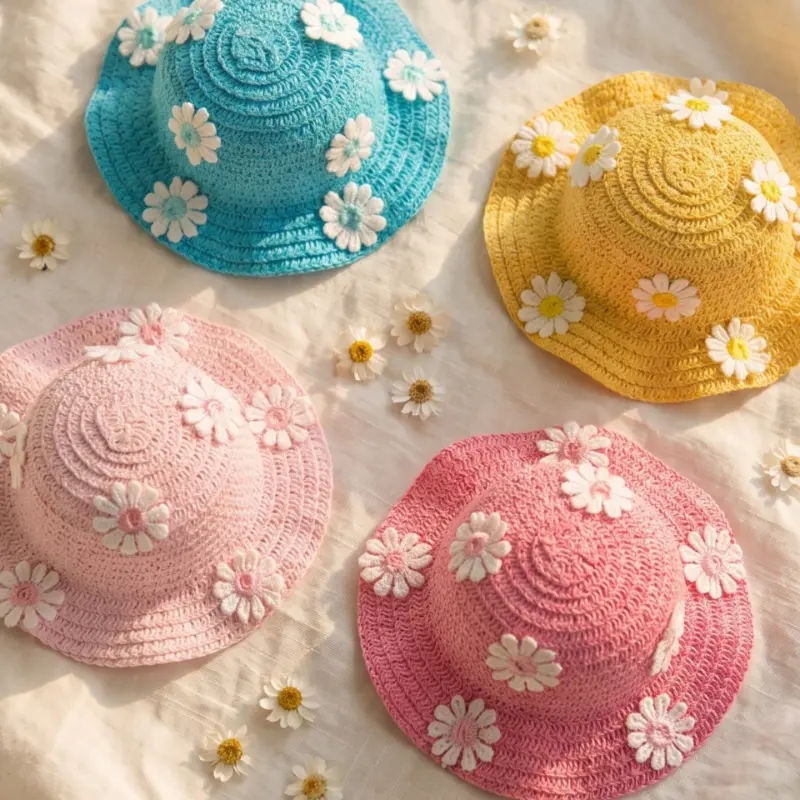
The daisy pet straw hat has a 13.5 cm wavy brim and an 8.5 cm inner opening. It weighs about 30 g and comes in five colors, which makes it a good first product for cat and small dog owners.
The pet baseball cap is made of cotton and has ear openings and an adjustable strap. It is the better choice for outdoor walks, and it can carry a custom embroidered logo. If you plan to add your brand, compare the methods in our guide to custom hat logo options.
How to Order the Right Sizes From a Manufacturer
A clear brief saves time and money. When you contact a factory, send:
- The pets you are targeting, with head widths if you have them.
- The hat style and the sizes you want, as brim diameter and inner opening.
- The strap type you prefer.
- Your quantity per size and color.
- Any logo, label or packaging you need.
Hatazzle is the export brand of China Yiwu Jucong Hat Factory. We make pet hats, straw hats, caps and party hats in our own factories, with samples in about 7–10 days and bulk production in 15–30 days. You can find more buying guides on the Hatazzle blog.
Frequently Asked Questions
Measure the width of the head from above, straight across between the base of the ears. Then pick a hat whose inner opening is close to that number. Also measure under the chin for the strap.
Most adult cats have a head about 6–8 cm wide, so a hat with an inner opening of about 7 cm usually fits. Larger or long-haired cats may need 8.5 cm.
No. There is no industry standard. Each brand uses its own chart, so always compare your pet’s head width with the inner opening listed by the seller.
Brim diameter is the full width of the hat and affects the look. Inner opening is the hollow part that sits on the head and decides the fit.
Choose the larger size. An elastic or adjustable chin strap can take up the extra room, but a hat that is too small will not sit flat.
Start with one or two sizes that cover head widths of about 7–10 cm. These fit cats and small dogs, which are the largest group of hat-wearing pets.
Yes. Most hat manufacturers can make custom sizes, but a new size needs its own pattern or mould, so it suits larger orders. Confirm the size on a sample first.
At Hatazzle the MOQ is 100 pieces per style, and colors can be mixed. Samples take about 7–10 days and bulk production 15–30 days.
Light is better. Most small pet hats weigh 20–40 g. Heavy decorations can make a hat tip forward and feel uncomfortable.
Keep it short and always supervise. Use hats for photos, parties and brief outings, and remove the hat if the pet shows any sign of stress.
Start Your Custom Hat Order
Contact Hatazzle today for custom hat manufacturing, private label solutions, and wholesale hat production. Send us your style, sizes and quantity, and our team will reply with a quote and sample plan. Get a quote