A clear hat quality control checklist is the cheapest insurance an importer can buy. Once a container leaves the port, every problem becomes expensive. Crooked logos, wrong sizes and crushed brims cannot be fixed from the other side of the world. They can only be discounted, returned or thrown away.
Most quality problems are not caused by bad factories. They happen because the buyer and the supplier never agreed what “good quality” means. One side expects perfection, the other follows normal trade practice, and nobody wrote it down.
This guide gives you a working checklist you can use on your next order. First, it explains when to inspect and how defects are classified. Next, it lists the checks for straw hats, caps and mini or pet hats, followed by logo, label and packing checks. Finally, it explains AQL sampling in simple terms and what to do if an order fails. It is written for importers, brand owners and sourcing agents.
Quick Answer: What Is Checked in a Hat Inspection?
A hat inspection checks five areas: size, shape, materials and color, decoration, and packing. An inspector takes a random sample when the order is finished and mostly packed, compares each hat with the approved sample and specification, and counts the defects. The order passes if the number of defects is within the limit agreed in advance.
When to Inspect
Quality control is not one event. Good buyers check at three points.
- Before production: the approved sample. This is your reference. Sign it, photograph it and keep one copy. Everything later is compared with it.
- During production. Ask for photos or a short video when the first pieces come off the line. Problems found here are easy to correct.
- Before shipment. A pre-shipment inspection is done when the order is complete and most of it is packed. It is the last chance to stop a bad order.
You can do the final inspection yourself, send an agent or hire a third-party inspection company. Tell your supplier at the start that you plan to inspect. A confident factory will agree at once.
How Defects Are Classified
Inspectors sort defects into three classes. Agree the definitions with your supplier before production.
| Class | Meaning | Hat examples |
|---|---|---|
| Critical | Unsafe, or breaks a legal requirement | Sharp metal parts, broken needle in the product, mould, wrong fibre label |
| Major | The customer would likely return it | Wrong size, crooked or misspelled logo, broken stitching, wrong color, crushed crown |
| Minor | Small flaw that does not stop a sale | A loose thread, a slight mark inside, a small weave irregularity |
The Core Hat Quality Control Checklist
These checks apply to every type of hat.
- Quantity. Count cartons and pieces against the order, by style, color and size.
- Size. Measure head size, brim width and crown height. Compare with the specification and the agreed tolerance.
- Shape. The crown is symmetrical and the brim is even.
- Color. Compare with the approved sample in daylight. Check that color is consistent across the order.
- Materials. The fabric or straw matches the approved sample in type, weight and feel.
- Workmanship. Stitching is straight and secure, with no skipped stitches or loose threads.
- Cleanliness. No stains, glue marks, chalk marks or odour.
- Labels. Brand label, size label, care label and country of origin are correct and well attached.
Checks for Baseball Caps and Bucket Hats
Fabric hats have their own weak points.
- Panels. Seams meet neatly at the top button. Panels are the same size.
- Front structure. On structured caps, the front stands up evenly without creases.
- Visor. The peak is centred, curved evenly and stitched in parallel rows.
- Eyelets. Evenly spaced, with no fraying.
- Closure. Snaps, buckles or straps open and close smoothly.
- Sweatband. Sewn flat, with no twisting.
- Washed finishes. The fade is consistent from cap to cap.
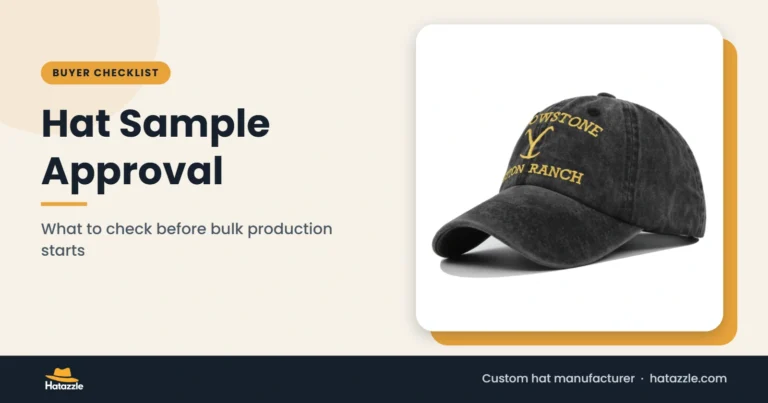
Washed and dyed finishes vary naturally, so agree an acceptable range with photos. A style such as our dyed washed cotton baseball cap is a good example, because each color is expected to show a slightly worn look. For fabric with a pile, like a corduroy bucket hat, also check that the pile runs in the same direction on every panel.
Checks for Straw Hats
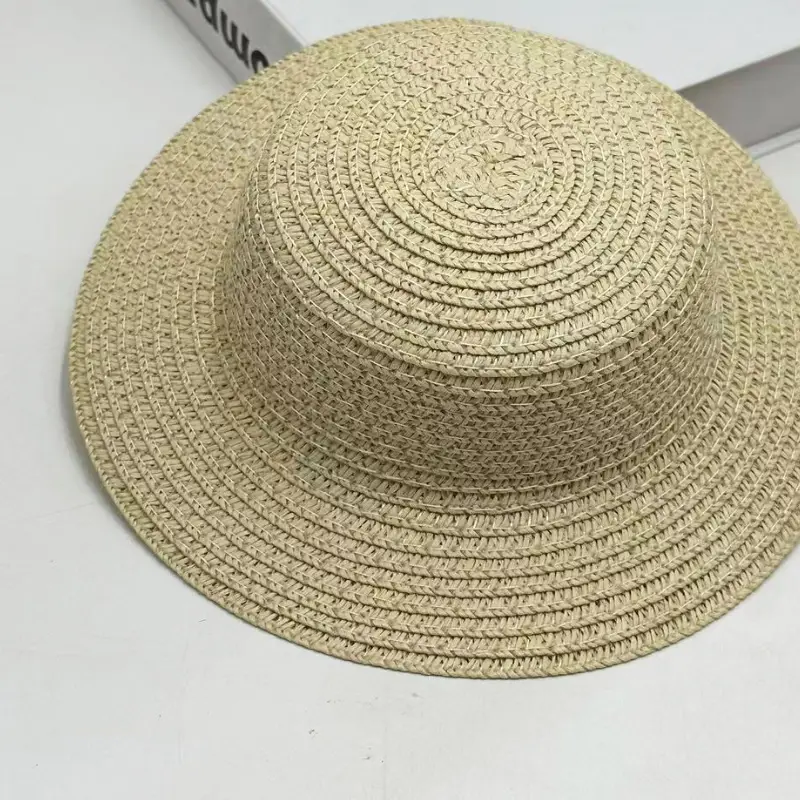
- Weave. No broken straws, holes or thin patches.
- Brim edge. Smooth and secure, with no sharp ends.
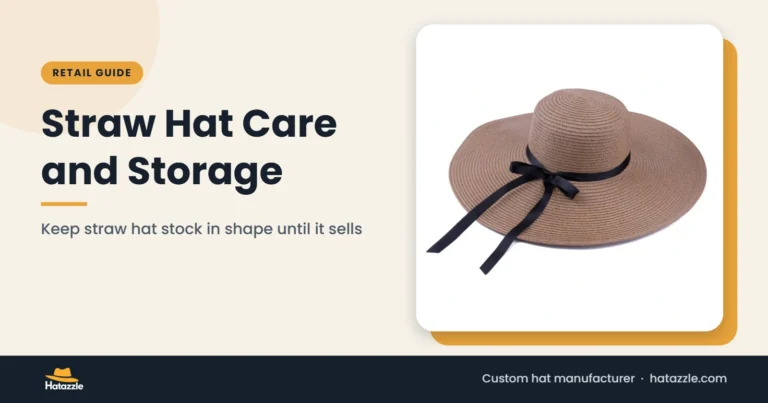
- Crown shape. No dents or flat spots from packing.
- Color and bleaching. Even tone, with no yellow or grey patches.
- Moisture. The straw is dry. Damp straw can go mouldy in transit.
- Band and trim. Ribbon is straight, joined neatly and fixed firmly.
What counts as a defect depends on the material. Natural wheat straw varies more than paper straw. Our guide to straw hat materials explains what is normal for each one.
Checks for Mini, Doll and Pet Hats
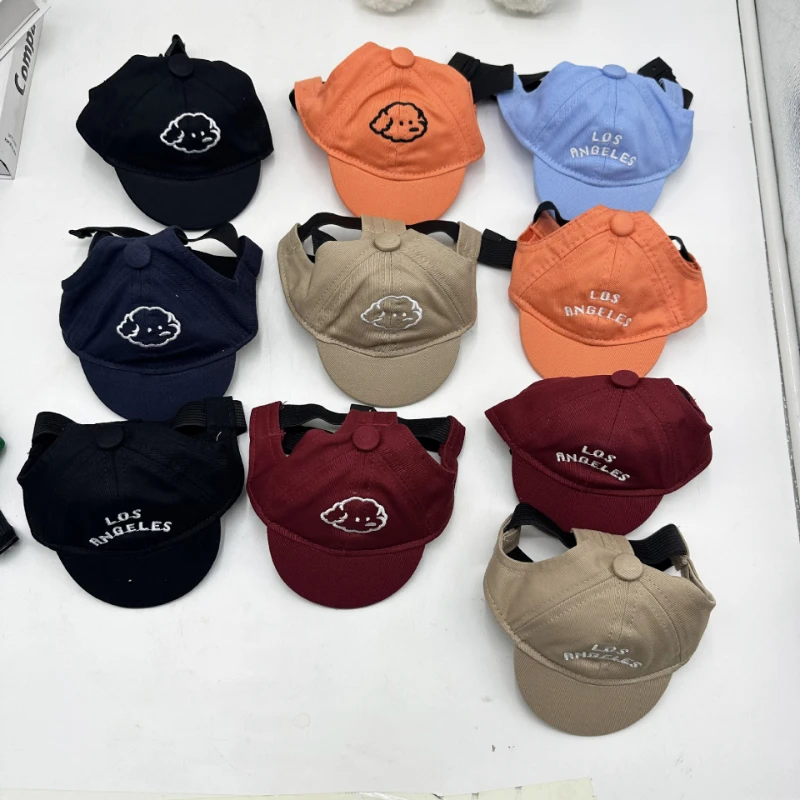
Small hats need extra attention to small parts.
- Inner opening. Measure it. This is the dimension that decides fit.
- Attachments. Pull gently on straps, bows, flowers and pompoms. Nothing should come loose.
- Elastic. Stretches and recovers, with secure ends.
- Edges. No sharp straw ends or exposed staples.
- Weight. Matches the sample. Extra glue or trim adds weight quickly on a small hat.
If the hats are for pets or for use with toys, tell your supplier which market you sell in, and confirm any testing you need before bulk production.
Logo and Decoration Checks
Logo errors are the most common major defect, and the most visible to your customer.
- Position. Centred and at the height shown on the artwork.
- Size. Width and height match the approved sample.
- Spelling and details. Compare letter by letter with the artwork.
- Thread or ink color. Matches the approved color reference.
- Embroidery. Dense and even, with no gaps, loops or puckering. The backing is trimmed.
- Printing. Sharp edges, no cracking, good adhesion.
- Patches and labels. Stitched or bonded flat on all sides.
Each method has its own typical faults. Our guide to custom hat logo options describes them in more detail.
Packing and Carton Checks
A perfect hat can still arrive damaged. Check the packing as carefully as the product.
- Inner packing. Hats are nested or supported so crowns do not crush.
- Polybags. Correct size, with any warning text or barcode you require.
- Quantity per carton. Matches the packing list.
- Carton strength. Strong enough to stack, and not overfilled.
- Shipping marks. Style, color, quantity and carton number are correct and readable.
- Dryness. Cartons and contents are dry.
AQL Sampling in Simple Terms
Checking every hat in a large order is rarely practical. Instead, inspectors use sampling. They pull a random number of pieces, check them, and judge the whole order from the result.
The rule they follow is called AQL, or acceptable quality limit. It sets how many defects are allowed in the sample before the order fails. Standard sampling tables, such as ANSI/ASQ Z1.4, tell the inspector how many pieces to check for each order size.
For consumer goods, buyers commonly ask for limits of 0 for critical defects, 2.5 for major defects and 4.0 for minor defects. These are common practice, not a law. You can agree stricter or looser limits with your supplier. What matters is that the limits are written into the order before production starts.
What to Do If an Order Fails
A failed inspection is not the end of the order. Stay practical.
- Get the evidence. Ask for the report with photos of each defect and the counts.
- Agree the fix. Usual options are sorting and repair, remaking the faulty pieces, or a price adjustment for minor issues.
- Re-inspect. Check again after the fix, and agree in advance who pays for the second inspection.
- Update the standard. Add the problem to your checklist for the next order.
A Simple Quality Timeline for Your Order
Put the checks on a calendar when you place the order, so nothing is left to the last week.
- Order confirmed. Send the specification sheet, artwork and defect limits. Agree the inspection date range.
- Sample approved. Sign and photograph the approved sample. Both sides keep one.
- Production starts. Ask for photos of the first finished pieces, including the logo and the inside of the hat.
- Production about 80% packed. Carry out the pre-shipment inspection.
- Inspection passed. Release the balance payment and book the shipment.
This sequence adds very little time to an order, and it gives you a clear decision point before the goods leave the factory.
Cost and Time: Is Inspection Worth It?
A third-party inspection usually takes one working day at the factory. Compare its cost with the value of the order and the cost of a failed delivery, including lost sales and return freight. For a first order with a new supplier, an inspection is almost always worth it. For repeat orders with a proven factory, many buyers move to occasional checks and rely on production photos in between.
Common Quality Control Mistakes
- No approved sample. Without a reference, nobody can say what is wrong.
- Vague standards. “Good quality” is not a standard. Measurements and photos are.
- Inspecting too late. If the goods are already at the port, you have no room to fix anything.
- Checking the product but not the packing. Many hat claims are for crushed crowns, not bad sewing.
- Paying the balance before inspection. Link the final payment to a passed inspection.
- Choosing only on price. A factory with its own quality checks costs less in the long run.
How Your Choice of Supplier Affects Quality
Inspection finds problems. A good supplier prevents them. Look for a factory that checks materials when they arrive, checks work on the line and inspects finished goods before packing. Ask how defects are recorded and what happens to rejected pieces. Our checklist on how to choose a hat manufacturer in China covers these questions.
Hatazzle is the export brand of China Yiwu Jucong Hat Factory. Every order is inspected in our own workshops before packing, and buyers are welcome to send a third-party inspector before shipment. We make caps, bucket hats, straw hats, pet hats and party hats, with samples in about 7–10 days and bulk production in 15–30 days.
Frequently Asked Questions
It is a written list of the points an inspector checks on a hat order: size, shape, materials, color, workmanship, logo, labels and packing, with the defect limits agreed in advance.
Check the approved sample before production, ask for photos during production, and do a final inspection when the order is finished and mostly packed.
Many buyers use 0 for critical defects, 2.5 for major defects and 4.0 for minor defects. You can agree different limits with your supplier.
Wrong size, crooked or incorrect logos, uneven color, loose threads, poor stitching and crowns crushed by weak packing.
Can I send a third-party inspector to a China hat manufacturer?
Yes. Most established manufacturers accept third-party inspections. Tell the supplier at the start of the order so the date can be planned.
It depends on the hat type and material. Agree the tolerance in writing before production, and confirm it on the approved sample.
This should be agreed in the contract. Usually the supplier fixes the faults, and the cost of re-inspection is agreed in advance.
Compare position, size, spelling and color with the approved artwork and sample. Check embroidery density, print sharpness and that labels are attached flat.
Hats should be nested or supported inside strong cartons that are not overfilled, kept dry, and marked clearly with style, color and quantity.
Yes, especially with a new supplier. A small order can still carry a full quality risk, so at least check production photos and a sample from bulk.
Start Your Custom Hat Order
Contact Hatazzle today for custom hat manufacturing, private label solutions, and wholesale hat production. Send us your style, sizes and quantity, and our team will reply with a quote and sample plan. Get a quote