The hat MOQ, or minimum order quantity, is often the first number a new buyer asks about and the most confusing one to compare. One factory says 50 pieces, another says 300, and a third says 1,000. The numbers look very different, but they often describe different things. One factory counts per style, another per color, and another per logo or fabric.
If you do not know what an MOQ covers, you cannot compare quotes fairly. You may also order more stock than you need, or plan a collection that the factory cannot accept at the quantity you expected.
This guide explains what MOQ means for hats, why factories set one, and the difference between MOQ per style, per color and per design. It also explains how mixed orders work and how order size changes the unit price. We wrote it for start-up brands, small retailers and buyers who are planning their first custom hat order. At the end you will find worked examples and a short list of questions to ask any supplier before you place an order.
Quick Answer: What Is the MOQ for Custom Hats?
For most custom hats, the MOQ is set per style and is usually between 50 and 300 pieces, depending on the hat type and the decoration. At Hatazzle, our standard MOQ is 100 pcs per style, and for many products you can mix colors inside that 100. Always ask a factory whether its MOQ is per style, per color or per logo, because that changes the real quantity you must buy.
Why Hat Factories Set an MOQ
An MOQ is not just a sales rule. It reflects real costs that are the same whether the factory makes 20 hats or 200
- Machine setup. Embroidery machines need a digitized logo file and thread changes. Printing needs screens or plates. Straw hats need molds or shaping blocks.
- Material buying. Fabric, straw braid and trims are bought by the roll, kilogram or minimum dye lot. A small order may leave the factory with unused material.
- Labor planning. A production line is set up for one style at a time. Very small runs mean more changeovers and more idle time.
- Quality control and packing. Inspection, labels and cartons take time for every order, no matter the size.
When the order is larger, these fixed costs are spread over more pieces, so each hat costs less. This is the same idea as the economic order quantity used in inventory planning: there is a balance between the cost of each order and the cost of holding stock.
MOQ Per Style, Per Colour or Per Design
The most important question is what the MOQ counts. Here are the common ways factories define it.
| MOQ type | What it means | Example with a 100 pcs MOQ |
|---|---|---|
| Per style | One hat shape and construction. Colors can usually be mixed. | 100 caps of one model, split into 50 black, 30 navy and 20 khaki. |
| Per colour | Each color is counted separately, often because fabric is dyed to order. | 3 colors means 300 caps in total. |
| Per logo or design | Each different logo or print needs its own setup. | Two logos on the same cap means 200 caps. |
| Per order | A total minimum for the whole order across styles. | Any mix of styles adding up to the order minimum. |
A quote that says “MOQ 50” but counts per color can end up larger than a quote that says “MOQ 100 per style” with mixed colors allowed. Always convert each quote into the real number of hats you would have to buy for your planned collection.
How Mixed Orders Work
A mixed order lets you split one MOQ across several colors, sizes or small variations. It is the best way for a small brand to offer choice without buying a large quantity of each option.
What can usually be mixed
- Stock colors of the same fabric or straw, when the material is already in the factory.
- Sizes, such as adult and kids versions of the same cap, if they use the same pattern.
- Simple trims, such as different ribbon colors on the same straw hat.
What usually cannot be mixed below the MOQ
- Custom-dyed colors that need a separate dye lot.
- Different hat shapes, because each needs its own pattern and setup.
- Different decoration methods, for example embroidery on some hats and printing on others.
If a mix is possible, ask whether there is a minimum per color inside the order. Some factories accept a mix but ask for at least 20 or 30 pieces of each color.
How MOQ Changes by Hat Type
Different hat types have different setup work, so MOQs vary. These are general patterns, not fixed rules:
- Baseball caps: often per style, with stock colors mixable. Embroidery adds a digitizing step, and some factories set a separate minimum per logo.
- Bucket hats: similar to caps. Printed fabrics and reversible styles may need a higher quantity because the fabric is printed to order.
- Straw hats: shaping and pressing need molds. Common shapes are easy to make in small runs; a new shape may need a higher quantity or a mold fee.
- Mini, doll and pet hats: small and light, so they are easier to produce in small batches. Mixed colors are common.
- Party and costume hats: often simple to make in mixed styles, but special trims or printed details can raise the minimum.
For logos, our guide to custom hat logo options explains how embroidery, printing and patches differ in setup and minimums.
How Order Size Changes the Unit Price
Most hat quotes use price breaks. The unit price drops at certain quantities because setup and material costs are spread across more hats. A typical structure looks like this:
| Quantity per style | Unit price level | Why |
|---|---|---|
| At the MOQ | Highest | Setup cost is shared by the fewest pieces. |
| 2–5 times the MOQ | Lower | Setup is spread further; materials are bought more efficiently. |
| Large runs | Lowest | Full rolls, full containers and long production runs. |
Do not chase the lowest unit price without a plan to sell the stock. Extra stock ties up money and storage space, and seasonal hats that do not sell must wait a full year. For a new design, it is often smarter to start near the MOQ, check sales and then reorder.
Can You Order Below the MOQ?
Sometimes. These are the common ways buyers get smaller quantities:
- Stock styles: hats the factory already makes may be available in smaller quantities, without custom work.
- Small-order surcharge: some factories accept fewer pieces for a setup fee or a higher unit price.
- Sample orders: a small paid sample run to test the market before a full order.
- Simpler decoration: a woven label or hang tag instead of embroidery can lower the minimum.
Ask openly. A good factory will explain which option fits your quantity instead of just saying no.

Worked Examples
Example 1: a small cap collection
A new streetwear brand wants one cap model in three colors with the same embroidered logo. With an MOQ of 100 per style and mixed colors allowed, the brand can order 100 caps in total, for example 40 black, 30 beige and 30 navy. With an MOQ of 100 per color, the same plan needs 300 caps.
Example 2: a pet store holiday range
A pet store wants four styles of holiday pet hats. Each style has its own MOQ of 100 pieces, so the minimum order is 400 hats. Colors inside each style can be mixed. The store can test all four styles and reorder the best seller.
Example 3: two logos on one hat model
A company wants the same bucket hat with two different event logos. If the factory counts MOQ per design, the order is 2 × 100 = 200 hats. If the logos use the same method and colors, ask whether they can share one setup, which may reduce the total.
MOQ and Lead Time
Larger orders take longer to make, but the difference is often smaller than buyers expect, because setup and material buying take time for every order. For hats at Hatazzle, samples take about 7–10 days and bulk production about 15–30 days, depending on quantity and decoration. The lead time for your order also includes shipping and customs, so plan the whole chain, not just production.
MOQ for Repeat Orders
The first order of a new design carries the most setup work: digitizing the logo, matching colors, making samples and preparing patterns. A repeat order of the same approved hat is simpler, because that work is already done. This is why some factories accept a smaller quantity on reorders, or keep the same MOQ but offer a shorter lead time.
To make reorders easy, keep a record of everything that was approved the first time: the sample photos, the logo file, thread or Pantone colors, label artwork and the packing method. Send the original order number with your reorder. If you plan to reorder often, ask the factory whether it can keep a small stock of your fabric, straw braid or labels, so the next run can start immediately.
Finally, think about the size of your first order with the reorder in mind. Ordering near the MOQ keeps risk low; a quick reorder covers success. For seasonal products, though, the reorder window may be too short, so the first order needs to be closer to your full forecast.
Questions to Ask Before You Accept an MOQ
- Is the MOQ per style, per color, per logo or per order?
- Can I mix colors or sizes inside one MOQ? Is there a minimum per color?
- Does the MOQ change if I use custom-dyed fabric or a custom straw color?
- Is there a setup or mold fee, and is it refunded on a larger order?
- What are the price breaks above the MOQ?
- Is the reorder MOQ the same as the first order?
- Does the MOQ include samples, or are samples charged separately?
Write the answers into your purchase order. Clear terms prevent arguments later, and they make it easier to compare factories. Our step-by-step guide on how to choose a hat manufacturer in China covers the other points to check, and our hat quality control checklist shows how to inspect the order once it is made.
Hatazzle MOQ in Practice
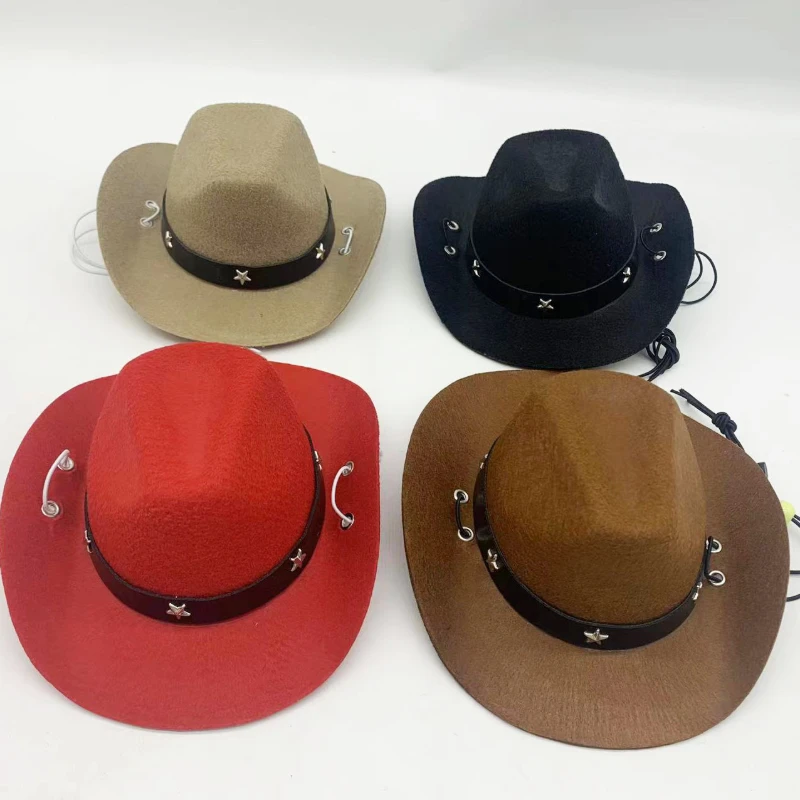
Our standard MOQ is 100 pcs per style, and on many products colors can be mixed within that quantity. Two examples are our pet cowboy hat with star band, offered in five colors, and our embroidered baseball hat, where the logo is added to your chosen cap colors. If your quantity is below the MOQ, tell us your plan and we will suggest the closest option.
Frequently Asked Questions
MOQ means minimum order quantity: the smallest number of hats a factory will make for one order line, usually per style.
Most custom hat MOQs are between 50 and 300 pieces per style, depending on the hat type and decoration. Hatazzle’s standard MOQ is 100 pcs per style.
It depends on the factory. Many count per style and allow mixed colors, while others count each color separately. Always ask before comparing quotes.
Often yes, when the colors use stock material. Some factories set a small minimum per color inside the order.
Setup, material buying, labor planning and packing have fixed costs. The MOQ makes sure these costs are covered.
Sometimes, through stock styles, a small-order surcharge, a paid sample run or simpler decoration. Ask the factory which option fits.
Yes. Unit prices usually drop at set quantity breaks because fixed costs are spread over more pieces.
Some factories count MOQ per logo or design because each needs its own setup. Ask whether two logos can share one setup.
Often it is, but some factories accept smaller repeat orders once the setup and samples are done. Confirm this in writing.
At Hatazzle, samples take about 7–10 days and bulk production about 15–30 days, depending on quantity and decoration.
Start Your Custom Hat Order
Contact Hatazzle today for custom hat manufacturing, private label solutions, and wholesale hat production. Send us your style, sizes and quantity, and our team will reply with a quote and sample plan. Get a quote